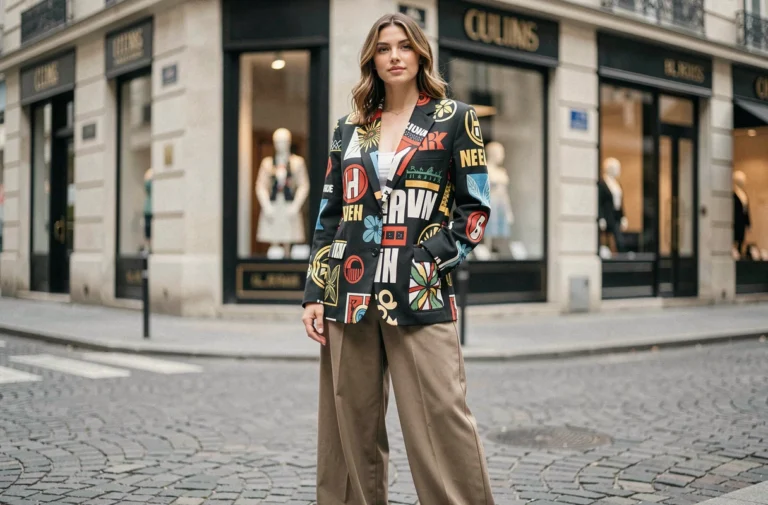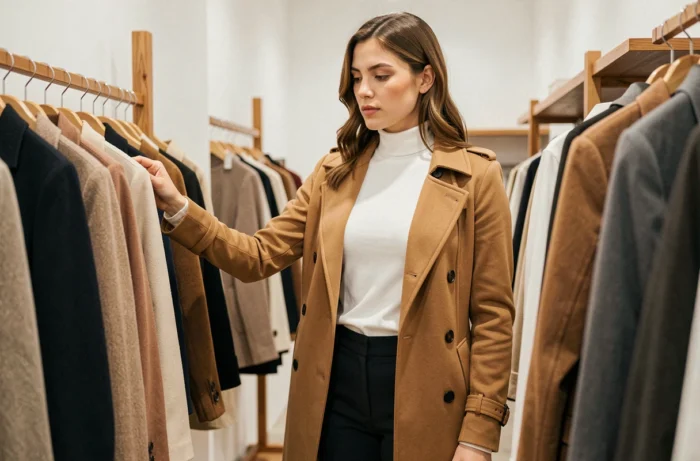
Fashion in 2026 is no longer just a list of items to buy each season. Purchase frequency is decreasing, consumers are making more choices between sustainable basics and statement pieces, and the second-hand market is fundamentally restructuring how a wardrobe is composed. In this context, staying stylish all year round requires less accumulation and more method.
European Regulation and the End of Textile Overproduction
The European regulation on product ecodesign (ESPR) now prohibits large companies from destroying their unsold clothing, accessories, and shoes within the European Union. This measure significantly changes the available clothing supply.
The consequences are direct on sales and end-of-line products. Brands are adjusting their production volumes and offering more streamlined collections. For consumers, this means less choice in clearance but better-calibrated pieces in terms of quality and seasonal relevance.
The digital product passport, mandated by the same regulation, will ultimately require complete traceability of clothing sold in Europe. Knowing the origin, composition, and durability of a piece before purchasing it will become the norm. Those following these developments on the fashion section of ComplexInfo are already measuring the extent of the ongoing change.
Fall-Winter 2026 Trends: Key Silhouettes
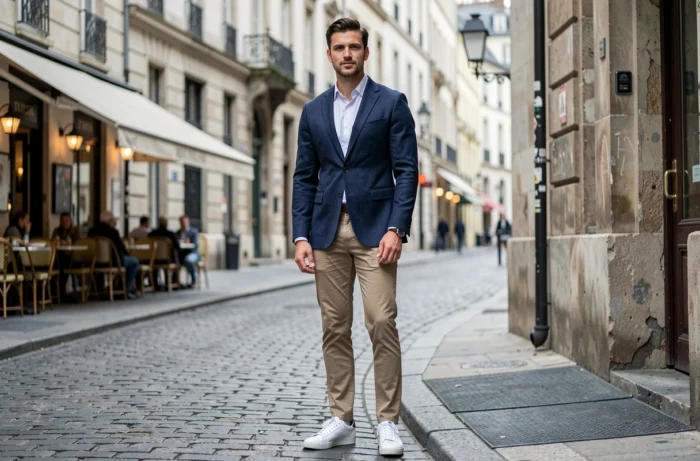
The fashion shows of fall 2026 outline some actionable lines for everyday wear. High-waisted trousers remain a staple, but cuts are evolving. The barrel jean, with its rounded leg and defined waist, is emerging as an alternative to classic slim and straight cuts.
In terms of colors, the autumn palette includes butter yellow, a soft hue that works well both as a sweater and as an accessory. Earthy tones and beige remain safe bets for anchoring a look effortlessly.
- The short trench replaces the classic trench for mid-seasons, with a more structured fall above the hip.
- The short colored jacket breaks the neutrality of a monochrome outfit without weighing down the silhouette.
- The long dress, worn with flat boots or sneakers, transitions through the seasons from spring to autumn.
These pieces are not seasonal whims. They work because they integrate into an existing wardrobe, which remains the true criterion for a worthwhile purchase.
Second-Hand and Vintage: Building a Unique Style Without Buying New
More than a third of 18-30 year-olds primarily buy second-hand clothing. Thrift stores, resale platforms, and exchanges between individuals are no longer just stopgap solutions. They constitute a full-fledged supply channel.
This practice changes the very notion of trend. Mixing a vintage 1990s jacket with current beige trousers produces a result that no total new look can replicate. The uniqueness comes from the temporal dissonance between the pieces.
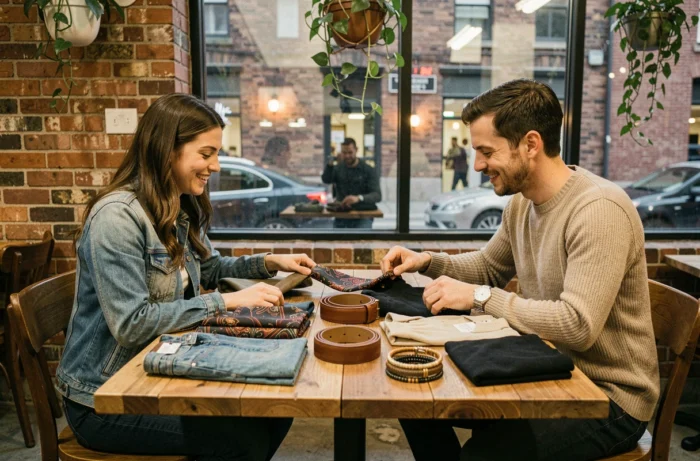
The main pitfall remains quality. A poorly inspected second-hand garment (weakened seams, unevenly faded fabric) can degrade the overall look of an outfit. Checking the condition of finishes, the fabric’s hold, and the sturdiness of closures is a step that should not be overlooked.
Budget and Trade-Off Between New and Second-Hand
The most effective approach is to reserve new items for technical basics (well-cut jeans, dense knit sweaters, quality shoes) and to seek character pieces (structured coat, patterned shirt, accessories) in second-hand. This division allows for maintaining a high level of style without multiplying expenses.
Style Tips That Work in Any Season
Some principles of outfit construction remain valid twelve months a year. Layering, for example, is not just for winter. Layering a t-shirt under an open shirt or slipping a thin turtleneck under a dress creates volume and visual depth, even on beautiful days.
The scarf remains an underestimated lever. Worn tied around the neck, as a belt, or in the hair, it changes the perception of an entire outfit for minimal cost. One well-placed accessory transforms more than an additional garment.
- Wearing a belt over a loose garment (oversized blazer, flowing dress) restructures the silhouette without changing pieces.
- Colored or patterned tights, worn under a skirt or dress in winter, add an immediate visual signature.
- Sunglasses, beyond their function, frame the face and give a stylistic direction to the look (minimalist, retro, sporty).
Adapting Colors Without Renewing Everything
The most economical method is to have a neutral base (black, white, gray, beige, navy blue) and to inject seasonal color through a single visible element. A butter yellow sweater in autumn, terracotta pants in spring. The rest of the wardrobe remains unchanged, only the color accent changes.
The 2026 fashion trends confirm a direction that has been underway for several seasons: elegance is built through the coherence of choices, not their quantity. Between regulations tightening supply, the second-hand market expanding possibilities, and styling techniques that maximize each piece, the tools to stay stylish all year round have never been more accessible.