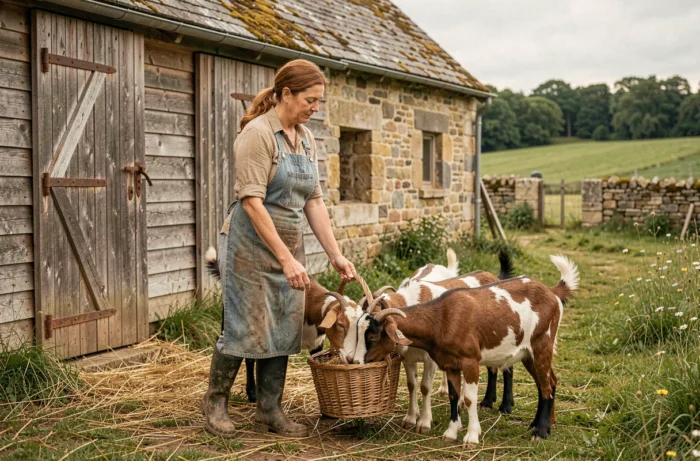
French rural tourism is undergoing a silent transformation. Behind the pictures of free-range chickens and homemade jam breakfasts, the regulatory framework governing farm stays has tightened since the end of 2024. Understanding these changes helps to distinguish an authentic farm, one that truly welcomes guests on an active agricultural operation, from a simple rural gîte redecorated for the occasion.
The Le Meur Law and Farm Stays: What the Fiscal Framework Changes Since 2025
The Le Meur law n°2024-1039 of November 19, 2024, has reshaped the rules for seasonal accommodations, including farms. Farmers who rent gîtes or guest rooms are directly affected by this reform.
The tax deductions under the micro-BIC regime have been reduced. For classified furnished accommodations and guest rooms, the deduction is now 50% (with a ceiling of 77,700 euros). Unclassified furnished accommodations now only benefit from a 30% deduction with a reduced ceiling of 15,000 euros. This distinction encourages farms to classify their accommodations to maintain profitability.
Another lever: some municipalities can now lower the rental ceiling from 120 to 90 days per year. In tight tourist areas, a farm that relied on four months of summer rentals must reconsider its economic model. Field reports vary on this point, as not all rural municipalities have activated this option.
For new furnished accommodations subject to a change of use, an energy performance diagnosis between A and E is required. Renovating a stone farmhouse or barn to meet this standard represents a significant investment that not all operators can absorb. Several structures offering farm stays have listed their accommodations and activities on the La Fermette De Marie website, providing a concrete overview of the types of accommodations available today.
Mandatory Registration of Tourist Accommodations in 2026
Since May 20, 2026, registration of tourist accommodations is mandatory across the entire French territory. This obligation also applies to farms that rent a gîte, a guest room, or an unusual accommodation (yurt, caravan, cabin).
The procedure goes through a unique national online service, with the assignment of a registration number to be displayed in any rental advertisement. Online booking platforms are required to verify the validity of this number and suspend non-compliant listings.
For a farmer managing their operation daily, this additional administrative layer is not trivial. The available data does not yet allow for measuring how many small farms have given up seasonal rentals due to these new constraints. However, structures already labeled (Accueil Paysan, Bienvenue à la Ferme, Gîtes de France) seem better equipped to handle these formalities, as their networks assist members in achieving compliance.
Active Farm or Rural Decor: Criteria for Identifying an Authentic Stay
The word “farm” is not subject to any legal protection in tourism. A property owner can name their gîte “Farm of the Hill” without operating a single hectare. A few criteria help to sort through before booking.
- Is the farm operation active? The presence of livestock, crops, or processing (cheese, honey, jams) indicates a real farm, not just a property in a rural area.
- Does the host offer participation in farm work or a tour of the operation? Networks like Accueil Paysan require their members to share the agricultural daily life with visitors.
- Do the products served at breakfast or meals come from the farm itself or from identified local producers? A guest table supplied from a supermarket is not a farm experience.
- Is the building of agricultural origin (barn, stable, farmhouse) or is it a new construction dressed in rustic style?
An authentic farm is recognized by its real agricultural activity, not by its decor. Labels provide a first guarantee, but a direct conversation with the operator before booking remains the most reliable filter.
The Case of Farm-Inns
Farm-inns represent a particular format. The operator cooks products primarily from their own farm and serves meals on-site. This model, prevalent in the Vosges Mountains or in Auvergne, imposes specific sanitary and administrative constraints (approval, traceability).
The farm meal plays a central role. It is often what distinguishes a farm-inn from a simple guest room with breakfast. The farm table transforms a rural accommodation into a true terroir experience.
Farm Holidays with Family: What Children Really Find There
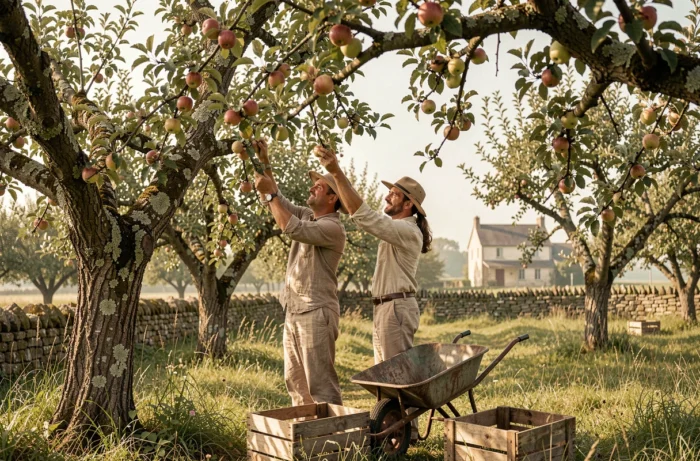
Farm stays massively attract families with children. Direct contact with animals (milking, feeding, egg collection) is the primary reason for booking for this audience.
Active farms often offer activities suitable for younger ones: discovering the vegetable garden, making bread, observing local wildlife. These farm activities are not scheduled à la carte, they follow the rhythm of the operation. Milking occurs at a fixed time, harvesting depends on the weather, and births cannot be planned for vacationers.
This constraint is part of the experience. A child waiting for the right time to collect eggs learns something that no theme park can replicate. Farms that offer a program of activities that is too smooth, disconnected from seasonal realities, stray precisely from what makes the stay valuable.
For groups of friends or extended families, some farms have large-capacity gîtes or reception rooms set up in former agricultural buildings. However, the coexistence of vacationers and agricultural life requires a minimum of flexibility: roosters crow early, tractors move around, and the smells of the countryside do not resemble those of a hotel.
A farm stay is not a standardized tourist product. It is an agreement between an operator who opens their doors and visitors willing to adapt to the rhythm of a living place. The farms that succeed in this balance are those that do not seek to resemble anything other than what they are.